



Skin care is often associated with treatments and products but what if the most effective approach is prevention? When it comes to conditions like atopic dermatitis (eczema), preventive dermatology plays a crucial role in managing symptoms and improving quality of life.
Atopic dermatitis is a chronic inflammatory skin condition that causes:
It commonly affects children but can continue into adulthood. Environmental triggers, genetics, and immune responses all play a role.
Most people focus on treating flare-ups—but prevention can significantly reduce their frequency and severity.
Preventive dermatology means:
This proactive approach helps avoid discomfort, infections, and long-term skin damage.
Understanding triggers is the first step in prevention:
1. Keep Skin Moisturized
Use fragrance-free moisturizers daily to maintain the skin barrier.
2. Choose Gentle Cleansers
Avoid harsh soaps; opt for mild, skin-friendly cleansers.
3. Avoid Known Triggers
Identify what worsens your symptoms and minimize exposure.
4. Wear Comfortable Clothing
Soft, breathable fabrics like cotton are ideal.
5. Stay Hydrated
Internal hydration supports overall skin health.
Preventive dermatology also includes early medical consultation.
If symptoms persist, timely treatment can prevent complications like infections or severe flare-ups.
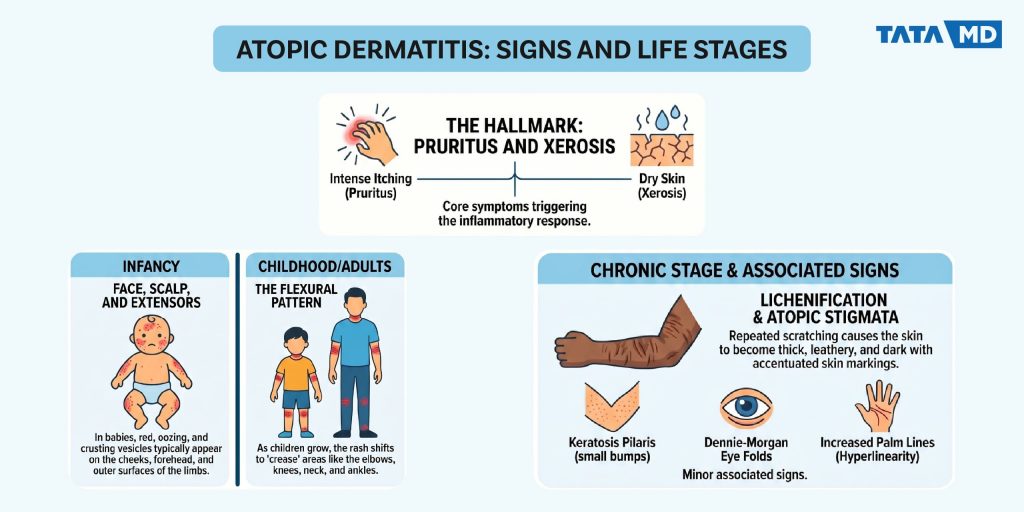
Children are more vulnerable, and preventive care becomes even more important:
Parents play a key role in maintaining consistency.
Healthcare is shifting from reactive treatment to preventive care, and dermatology is no exception. Managing conditions like atopic dermatitis is not just about medication—it’s about building daily habits that protect the skin.
Consult a healthcare professional if you notice:
Early care ensures better outcomes.
Atopic dermatitis can be challenging, but with the right preventive approach, it is manageable.
Preventive dermatology is not just underrated—it’s essential.
By focusing on daily care, avoiding triggers, and seeking timely guidance, you can maintain healthier skin and reduce flare-ups.

Tata MD Healthcare Centre, 2nd Floor Prime Square, Sathya Sai layout, Whitefield, Bengaluru, Karnataka Pincode: 560066
View on Google Map
Monday to Saturday | 08:00 AM - 08:00 PM
Sunday | 10:00 AM - 02:00 PM