



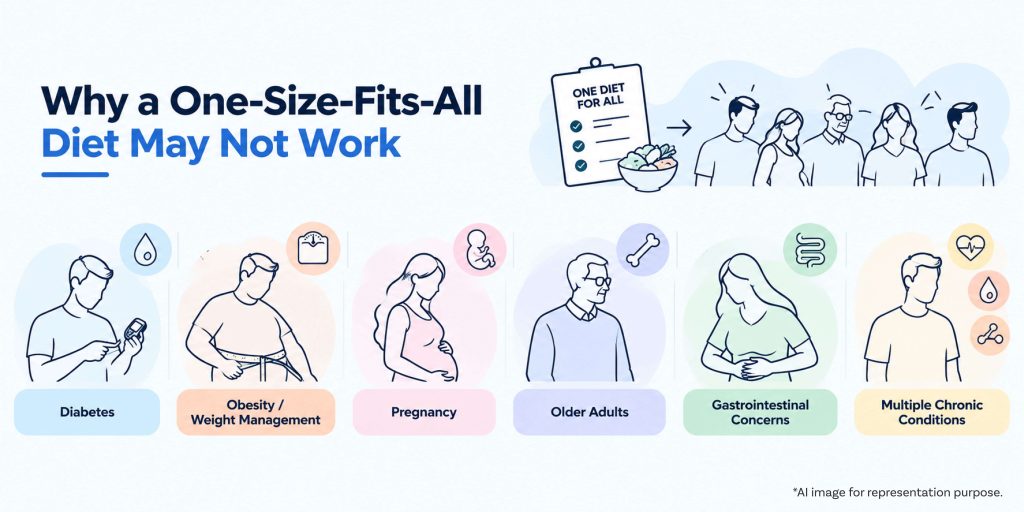
When it comes to nutrition, there is no single diet that works for everyone.
Two people may eat the same meal but respond very differently. One may feel energetic and satisfied, while the other may experience a glucose spike, bloating, fatigue, or hunger soon after. These differences can be influenced by age, metabolism, medical conditions, activity levels, sleep, stress, food preferences, medications, and lifestyle.
That is why nutrition should not be about following the latest diet trend. It should be about understanding what works for you.
At Tata MD, personalized nutrition services are designed to move beyond generic diet charts and provide recommendations that are better aligned with an individual’s health goals, lifestyle, and clinical needs.
Traditional diet plans often group people into broad categories, such as weight loss, diabetes, or high cholesterol and provide similar recommendations to everyone.
While general healthy eating principles remain important, individual responses can vary significantly.
For example, a person with diabetes may need to focus on carbohydrate quality and meal timing, while someone managing obesity may need greater attention to satiety, portion size, protein intake, and eating behaviour.
Similarly, a pregnant woman, an older adult, a person with gastrointestinal concerns, or someone with multiple chronic conditions may each require a different nutritional approach.
This is where personalized nutrition can add value.
Personalized nutrition is an approach that considers an individual’s unique health profile before recommending dietary changes.
A personalized nutrition plan may take into account factors such as:
Instead of asking, “What is the best diet?”, personalized nutrition asks a more useful question:
“What is the most appropriate nutrition plan for this individual?”
At Tata MD, nutrition is approached as part of the larger health journey rather than as an isolated service.
The process begins with understanding the individual — not just what they eat, but also their health status, lifestyle, challenges, preferences, and goals.
1. Understanding Your Health Profile
The first step involves reviewing relevant health information, which may include current medical conditions, medications, weight history, laboratory reports, lifestyle patterns, and dietary habits.
This allows the nutrition team to identify areas that may require greater attention.
2. Assessing Eating Patterns and Lifestyle
Nutrition is influenced by much more than food availability.
Work schedules, sleep, stress, cravings, travel, family routines, physical activity, and even cooking habits can influence what a person is realistically able to follow.
Understanding these factors helps make recommendations more practical and sustainable.
3. Creating a Personalized Nutrition Plan
Based on the assessment, a nutrition plan can be created around the individual’s requirements.
The focus may include:
The aim is not to create a restrictive diet, but a plan that can fit into everyday life.
Nutrition plays an important role in the management of several chronic health conditions.
At Tata MD, personalized nutrition may complement medical care for individuals managing conditions such as:
Food choices, portion sizes, meal timing, activity, and sleep can all influence blood glucose levels.
Personalized nutrition can help individuals understand how to build balanced meals and make more informed choices while keeping their broader treatment plan in mind.
Weight management is about eating less.
Hunger, cravings, stress, sleep, physical activity, metabolism, and behavioural patterns can all influence weight.
A personalized approach looks at these factors together rather than relying solely on calorie restriction.
Dietary patterns can influence cholesterol, triglycerides, blood pressure, and overall cardiovascular risk.
Recommendations may focus on fibre, healthy fats, food quality, weight management, and sustainable lifestyle changes.
Nutritional requirements change during pregnancy.
Women with gestational diabetes, prediabetes, obesity, or other medical concerns may need more individualized guidance to support both maternal and fetal health.
Bloating, irregular meal patterns, low fibre intake, inadequate hydration, and food intolerance can affect everyday well-being.
A personalized plan can help identify practical dietary strategies while ensuring adequate nutrition.
Knowing what to eat is only one part of the challenge.
The bigger challenge is often maintaining healthy choices over time.
Many people start a nutrition plan with enthusiasm but struggle when work becomes busy, travel increases, stress rises, or cravings return.
This is why personalized nutrition should also consider behaviour.
At Tata MD, the focus can include helping individuals identify barriers, build healthier routines, set realistic goals, and make gradual changes that are easier to sustain.
Small changes repeated consistently can often be more valuable than extreme changes followed for only a few weeks.
Technology and health data can make nutrition more meaningful.
Where clinically appropriate, information from blood tests, glucose readings, activity, sleep, food logs, and other health parameters can help provide additional context.
Rather than looking at food in isolation, these insights can help connect nutrition with a person’s broader health journey.
This can support more informed conversations between the individual and the care team.
Personalized nutrition is not about creating complicated diets.
It is about making nutrition more relevant, realistic, and actionable.
A good nutrition plan should work with a person’s lifestyle — not against it.
The right approach can help individuals:
At Tata MD, we believe healthcare should be increasingly personalized, connected, and focused on long-term well-being.
Nutrition is an important part of that journey.
Because the best diet is not necessarily the most popular diet.
It is the one that considers your health, your lifestyle, your preferences, and your goals.
With personalized nutrition services at Tata MD, the focus is on helping individuals make informed and sustainable choices that support better health over time.

Tata MD Healthcare Centre, 2nd Floor Prime Square, Sathya Sai layout, Whitefield, Bengaluru, Karnataka Pincode: 560066
View on Google Map
Monday to Saturday | 08:00 AM - 08:00 PM
Sunday | 10:00 AM - 02:00 PM