Acne Treatment in Bangalore: Causes, Symptoms & Expert Skin Care Guide - Tata MD

Acne Treatment in Bangalore: Causes, Symptoms & Expert Skin Care Guide

By Dr. Kapil Baheti, MD Dermatology, Tata MD
3 April 2026
Acne Treatment in Bangalore: Causes, Symptoms & Expert Skin Care Guide

Acne Treatment in Bangalore: Causes, Symptoms & Expert Skin Care Guide

Acne vulgaris is among the most prevalent dermatological disorders encountered in clinical practice, affecting adolescents as well as a significant proportion of adults. Contrary to popular belief, acne is not merely a cosmetic concern but a chronic, relapsing inflammatory disorder of the pilosebaceous unit, often requiring long-term, structured medical management.

For individuals seeking acne treatment in Bangalore, it is imperative to understand that successful outcomes depend on identifying the underlying etiopathogenesis and adopting an evidence-based, individualized therapeutic approach.

Etiopathogenesis of Acne

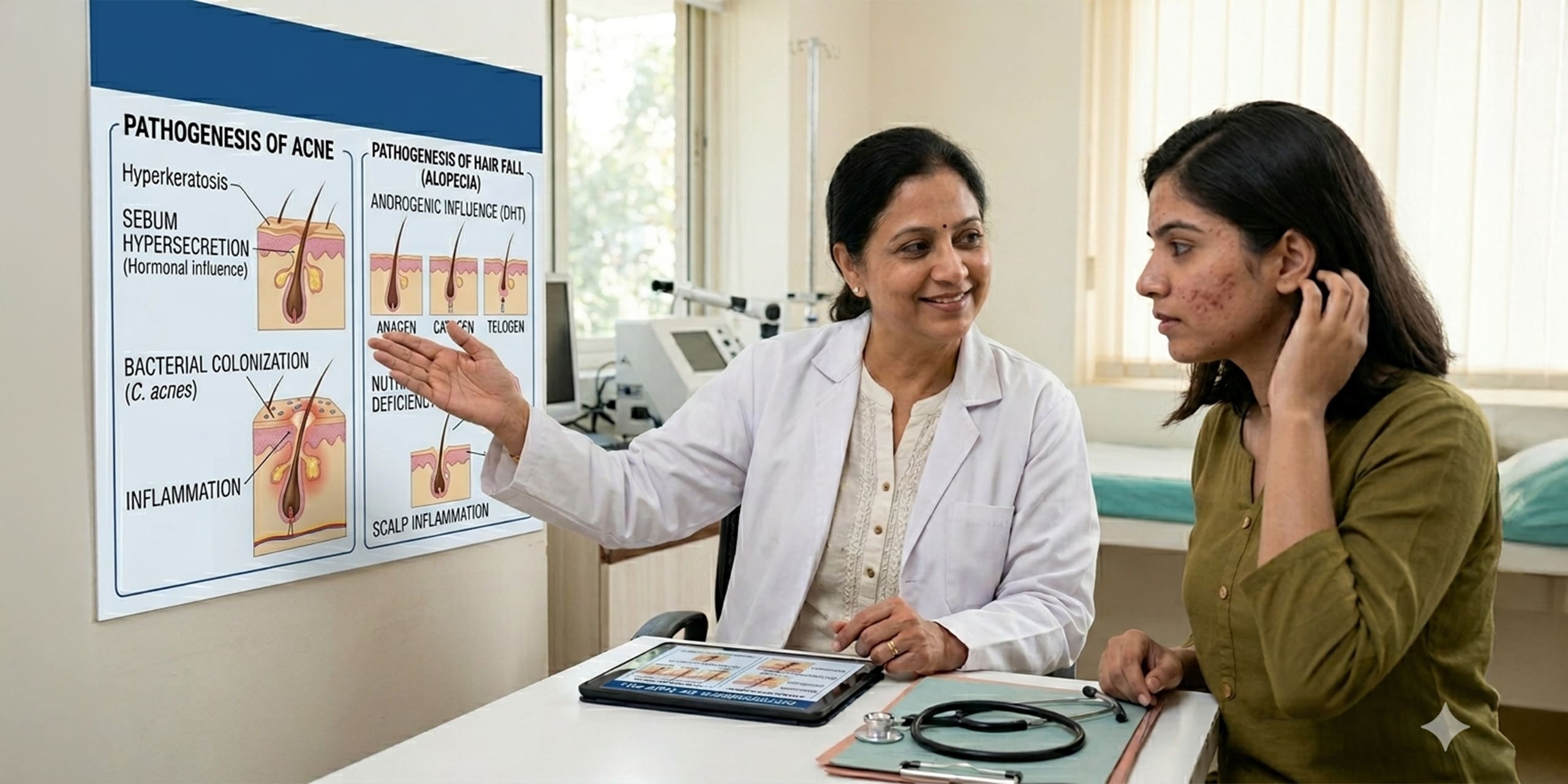
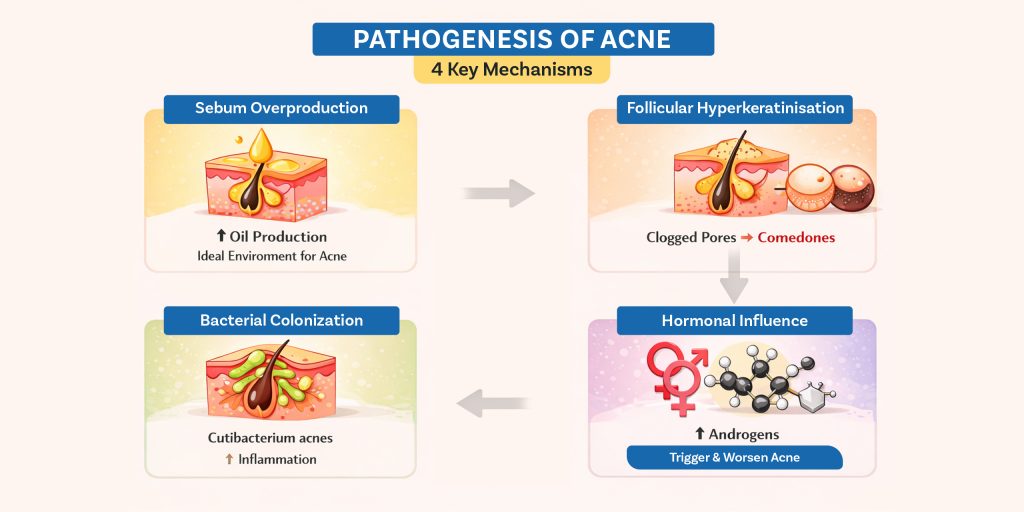
Acne is a multifactorial condition with four primary pathogenic mechanisms:

  • Sebaceous gland hyperactivity leading to increased sebum (oil) production
  • Follicular hyperkeratinisation, resulting in comedone formation (clogging of pores)
  • Colonization by Cutibacterium acnes, contributing to inflammation
  • Androgen-mediated hormonal influence, particularly in adolescents and adult females

Additional contributing factors include:

  • High glycaemic diet and dairy intake
  • Psychological stress
  • Sleep disturbances
  • Environmental factors such as pollution

These interacting pathways explain the heterogeneity in clinical presentation and treatment response.

Clinical Presentation

Acne manifests across a spectrum of lesions:

  • Non-inflammatory lesions: open and closed comedones (blackheads and whiteheads)
  • Inflammatory lesions: papules, pustules
  • Severe forms: nodules, cysts, and conglobate acne

Post-inflammatory sequelae are common and include:

  • Post-inflammatory hyperpigmentation (PIH)
  • Atrophic or hypertrophic scarring

Early identification and intervention are critical to prevent irreversible cutaneous damage.
Acne Treatment in Bangalore

Associated Dermatological and Systemic Considerations

Patients with acne frequently present with:

  • Seborrhoeic diathesis (oily skin, seborrheic dermatitis)
  • Barrier dysfunction, leading to increased sensitivity and irritation
  • Coexisting conditions such as acne excoriée, eczema, or rarely psoriasis

In select cases, particularly adult females, evaluation for underlying endocrinopathies (e.g., PCOS) may be warranted.

Limitations of Over-the-Counter Therapies

A significant proportion of patients initially resort to non-prescription treatments. However:

  • These formulations often lack pathway-specific targeting
  • Inappropriate use may result in barrier damage and irritant dermatitis
  • Delayed initiation of effective therapy increases the risk of scarring and chronicity

Thus, unsupervised treatment frequently leads to suboptimal outcomes.

Principles of Evidence-Based Management

Management of acne should be graded, combination-based, and individualized, depending on severity, skin type, and patient profile.

1. Topical Therapy (First-line in mild to moderate acne)

  • Topical retinoids: normalize follicular keratinisation and prevent comedogenesis
  • Benzoyl peroxide / topical antimicrobials: reduce bacterial load and inflammation
  • Combination formulations for synergistic efficacy

2. Systemic Therapy (Moderate to severe or resistant acne)

  • Oral antibiotics (short-term, rational use)
  • Hormonal therapy in indicated female patients
  • Oral isotretinoin: gold standard for severe, recalcitrant acne—requires strict monitoring

3. Procedural Dermatology Interventions

  • Chemical peels (salicylic acid, glycolic acid) for active acne and PIH
  • Laser and light-based therapies for inflammatory control and scarring
  • Microneedling / subcision for acne scars

4. Adjunctive Skincare and Lifestyle Modification

  • Use of non-comedogenic, barrier-repair formulations
  • Photoprotection with broad-spectrum sunscreen
  • Dietary modulation (low glycaemic load, balanced nutrition)
  • Stress and sleep optimization

Importance of Early and Appropriate Intervention
Delayed or inadequate treatment may result in:

  • Permanent scarring
  • Persistent hyperpigmentation
  • Increased psychological morbidity
  • Prolonged and cost-intensive treatment courses

Early dermatological consultation significantly improves both clinical and cosmetic outcomes.

Selecting the Right Dermatological Care

When choosing a dermatologist in Bangalore, consider:

  • Clinical experience across acne subtypes
  • Adherence to evidence-based protocols
  • Availability of comprehensive medical and procedural treatments
  • Emphasis on patient education and long-term follow-up

Conclusion

Acne is a chronic inflammatory dermatosis requiring a scientific, individualized, and sustained treatment approach. With timely intervention and appropriate dermatological care, it is possible to achieve long-term remission, minimize sequelae, and restore skin health.

For those seeking acne treatment in Bangalore, consultation with a qualified dermatologist ensures not just symptomatic relief, but holistic and durable skin improvement.