


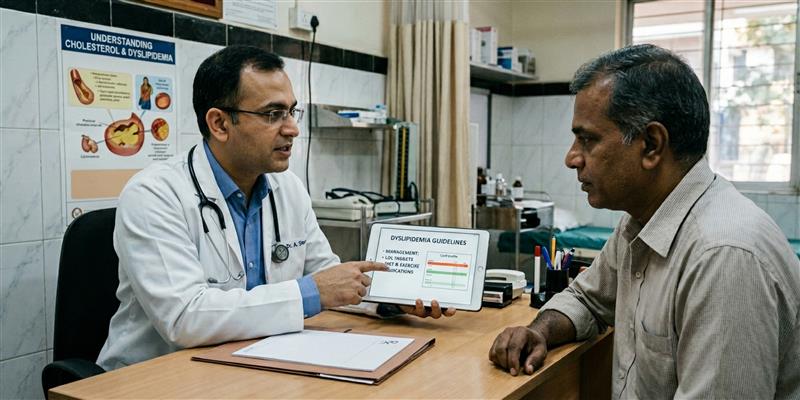
Think of cholesterol damage like rust on a pipe. The earlier you stop it, the less damage accumulates over a lifetime. For years, cholesterol testing has been a routine part of health check-ups, but the way we interpret those numbers is evolving. With the latest LIPIDS 2026 updates, your cholesterol report is no longer just a set of numbers. it’s a more powerful tool to predict, prevent, and manage heart disease.
Cholesterol plays a crucial role in your body, helping build cells and produce hormones. But when levels become imbalanced, especially with high LDL (often called “bad cholesterol”) it can silently lead to plaque buildup in your arteries. Over time, this increases the risk of heart attacks and strokes.
What’s important to understand is that this process often begins early and progresses quietly. That’s why early detection and timely action are key.
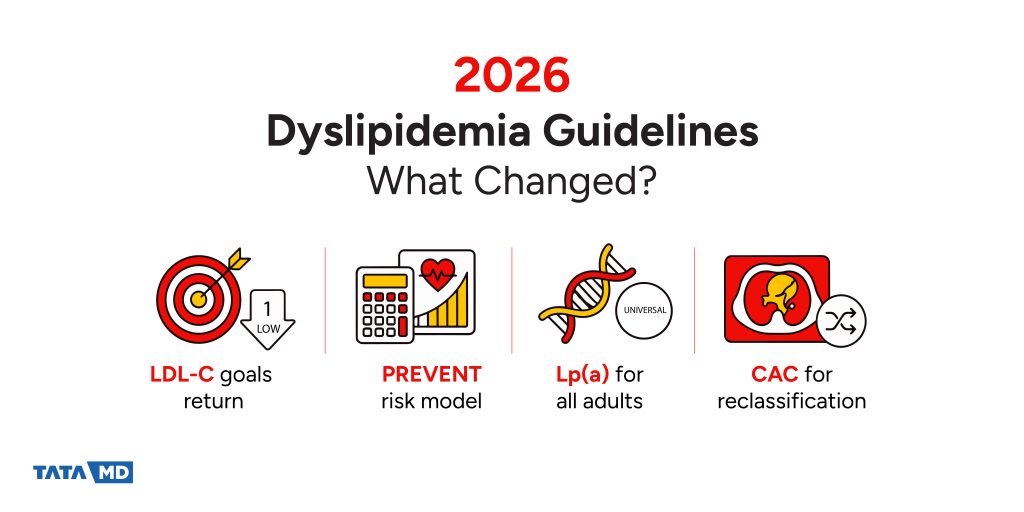
Here are some of the key updates
1. How early, how low, and for how long?
Focus on starting earlier, achieving lower targets, and maintaining them longer based on individual risk.
2. Imaging & biomarkers (CAC scoring, Lipoprotein(a), Apoprotein B):
Scans can help guide treatment decisions, and one-time testing can identify inherited cholesterol risk.
3. Earlier statin initiation:
Encouraged, as lifetime exposure to cholesterol (atherogenic burden) plays a critical role.
4. Early add-on therapies:
Using combination treatments is now considered safe and effective.
5. Triglycerides in focus:
Now integrated into overall risk assessment and prevention strategies.
6. Paediatric & adolescent screening:
Lipid screening is now recommended at an earlier age.
Many people assume cholesterol problems come with symptoms, but that’s rarely the case. You could feel perfectly fine while damage is slowly building up in your arteries.
A simple blood test or advanced lipid profile can help identify risks early. In some cases, imaging or scans may also be recommended to assess how much impact cholesterol has already had on your blood vessels.
The advantage? Early detection gives you time to reverse or control the condition before it becomes serious.
The good news is that managing cholesterol is highly achievable with the right steps:
• Adopt a heart-healthy diet: Focus on whole foods, healthy fats, and reduce processed and fried items.
• Stay physically active: Even 30 minutes of moderate exercise most days can make a difference.
• Monitor your weight and blood sugar: These are closely linked with lipid levels.
• Quit smoking and limit alcohol: Both can negatively impact your heart health.
• Follow medical advice: If prescribed, medications like statins can be life-saving.
Your cholesterol report is no longer just a routine check, it’s a window into your future heart health. With the LIPIDS 2026 updates, the focus has shifted toward early action, personalized care, and long-term prevention.
Think back to that pipe analogy: preventing rust is always easier than repairing damage. The same applies to your arteries. The sooner you understand and act on your cholesterol numbers, the better your chances of maintaining a healthy heart for years to come.
Now is the time to take your cholesterol seriously not later, not when symptoms appear, but today.

Tata MD Healthcare Centre, 2nd Floor Prime Square, Sathya Sai layout, Whitefield, Bengaluru, Karnataka Pincode: 560066
View on Google Map
Monday to Saturday | 08:00 AM - 08:00 PM
Sunday | 10:00 AM - 02:00 PM